Roofs are among the parts of a building most exposed to rain, snow, wind and temperature changes. Even a small waterproofing defect can therefore cause significant damage over time.
Water entering through roof layers can lead to damp ceilings, mould, damaged thermal insulation, corrosion of metal elements and deterioration of interior finishes. In industrial and commercial buildings, leaks can also affect equipment, stock and operations.
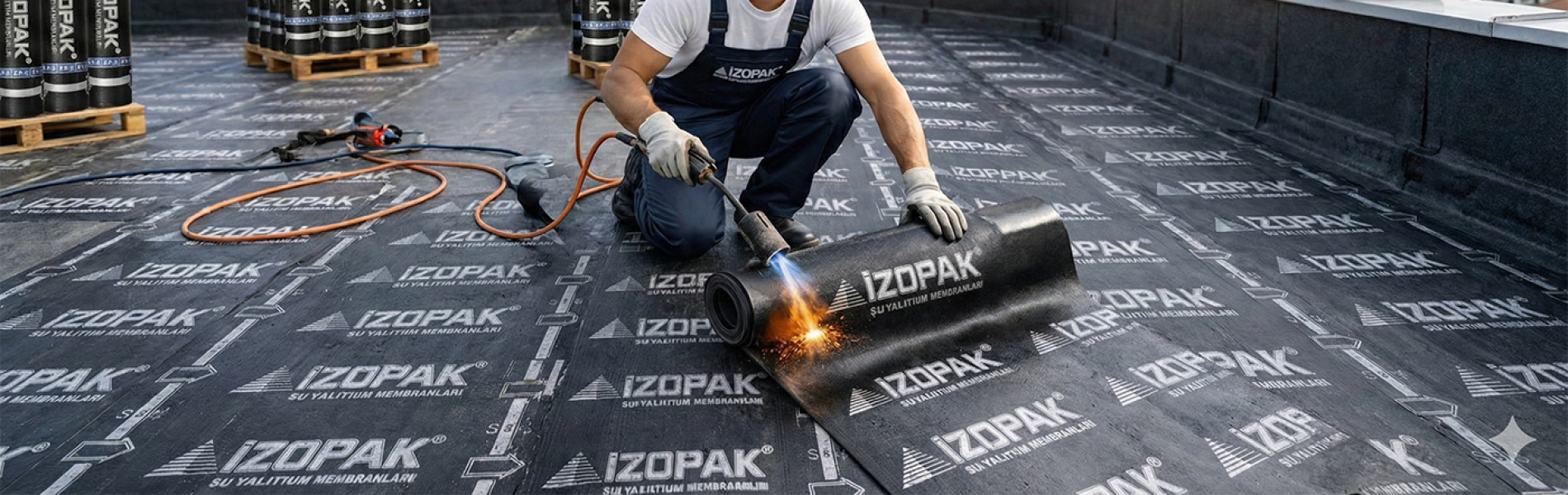
Bituminous membranes have long been used for roof waterproofing. When installed correctly, they form a continuous waterproof layer. On large roof areas, joint quality and detailing are as important as the membrane itself.
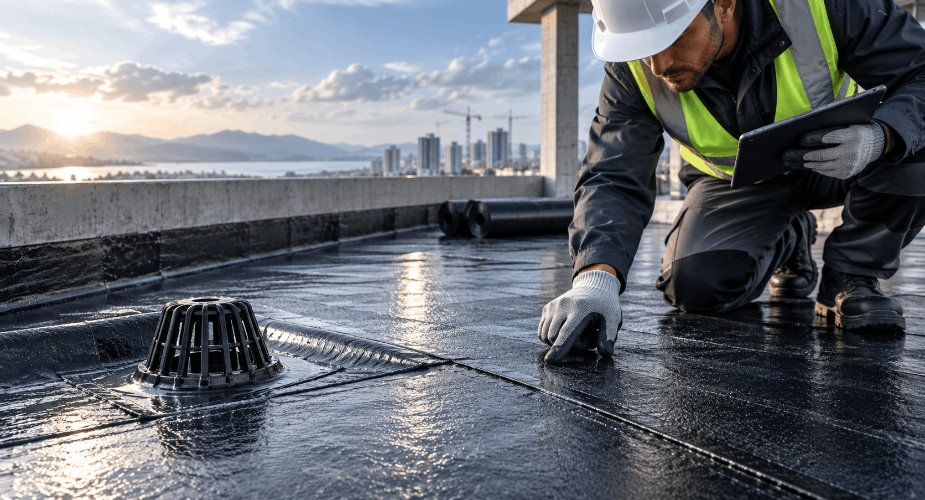
Drains, parapets, chimneys, service penetrations and corners are sensitive areas. Waterproofing continuity must be maintained, while roof falls and drainage should prevent prolonged ponding.
Durability, climate performance, installation method, technical properties and expected service life should be assessed together with initial cost.
İzopak provides bituminous membrane solutions for different roof types and professional project requirements.
Reliable roof waterproofing depends on the right membrane, correct drainage design, sound detailing and professional installation.